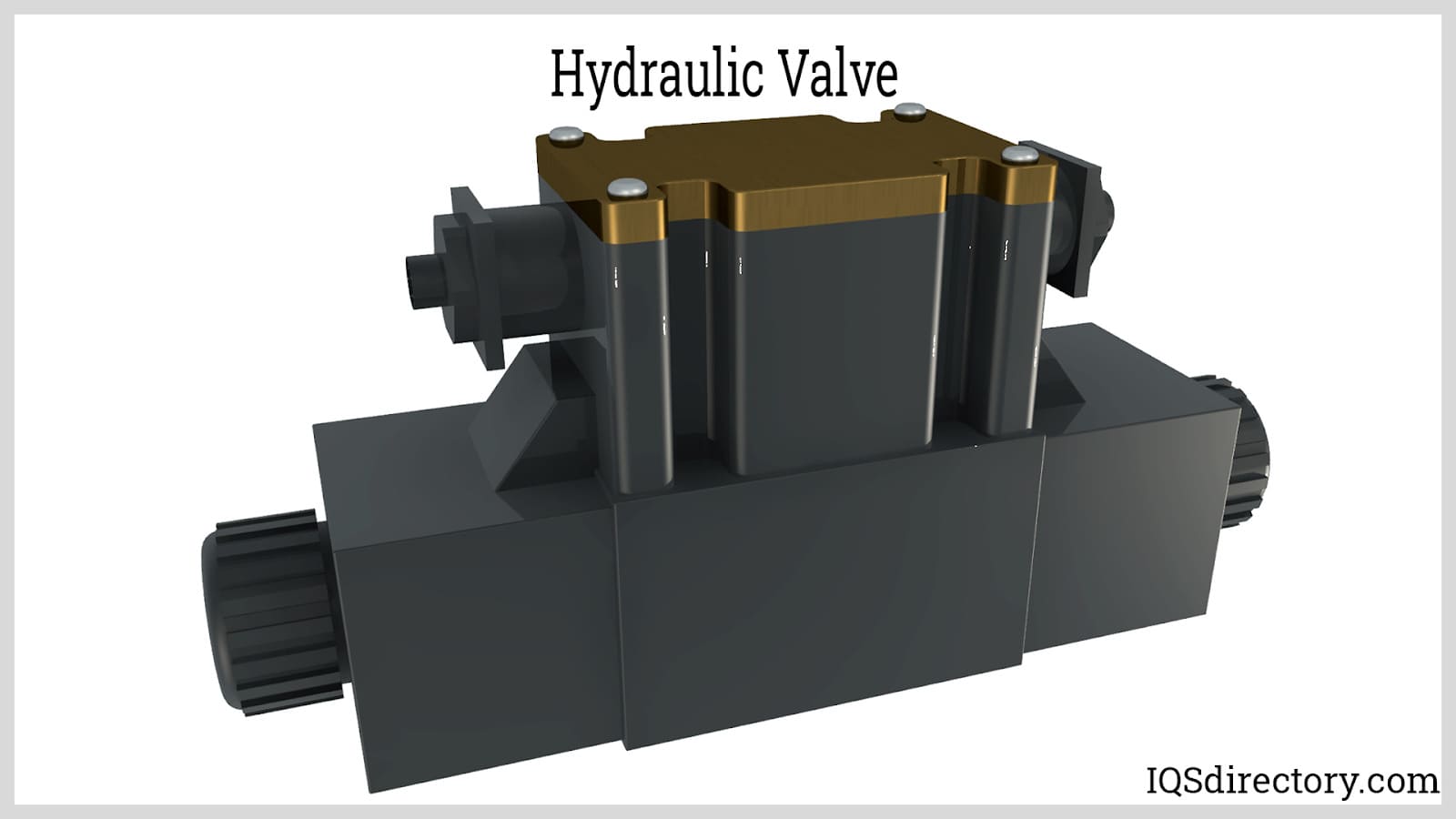
Hydraulic valves are integral parts of hydraulic power systems. These types of valves enable the precise customization and control of fluid flow and pressure within hydraulic systems, thus enabling the safe transmission of hydraulic fluid for energy purposes. Generally speaking, a valve refers to any mechanical part (with sealing properties) that somehow regulates the flow of a fluid. Valves also work with non-liquid fluids such as gases. Read More…
We are dedicated to providing our customers with the highest quality hydraulic valves available in the industry! Our research and development departments are dedicated to working around the clock in order to keep our products on the leading edge of technological innovations at all times because we know that you rely on the most advanced products in the market! To learn more visit our website...
At Hyseco, Inc., we specialize in hydraulic systems, and our hydraulic valves are at the heart of what we do. We design and manufacture valves that provide reliable flow control, pressure regulation, and directional control for a wide range of industrial and mobile applications.

Hader Industries, Inc. offers a variety of pumps, motors, valves, cylinders. We're your one stop for after market hydraulic services. We also offer machining, re-chroming, honing, fabrication, and many other services. Outstanding customer service is our goal, we're here to provide solutions for your needs. Call or visit our website today for more information.
Founded in 1945, Spencer Fluid Power remains a value added distributor of hydraulic components and systems. Spencer Fluid Power continues to sell and support hydraulic components to a wide array of customer types. Small to large OEM's, timber, mining, construction and oil & gas are just a sample of the numerous industries Spencer supports today.


More Hydraulic Valve Manufacturers
Hydraulic valves are critical components in modern hydraulic systems, designed to precisely control the flow, direction, and pressure of hydraulic fluid. These valves serve essential functions such as starting or stopping fluid flows, adjusting flow rates, changing the direction of fluid movement, and regulating or relieving system pressure. With an ever-expanding range of hydraulic valve types and configurations, users can select from solutions tailored to their specific industry requirements and applications. Understanding the fundamental role and diversity of hydraulic valves is essential when researching, selecting, or specifying components for advanced hydraulic systems.
History of Hydraulic Valves and Systems
The evolution of hydraulic valves is closely tied to the broader history of hydraulic systems. The earliest forms of hydraulic technology date back to the 6th century BC, when the Mesopotamians and Egyptians utilized water power for irrigation and agricultural infrastructure. As civilizations advanced, the application of hydraulics spread to the Hellenistic period and was further refined in ancient Persia, China, Sri Lanka, and Rome, underpinning advancements in aqueducts, waterwheels, and primitive fluid control devices.
The modern era of hydraulics began in the 17th century, driven by scientific breakthroughs from pioneers such as Benedetto Castelli and Blaise Pascal. Pascal’s Law, which states that pressure applied to a confined fluid is transmitted undiminished throughout the fluid, forms the foundation of all hydraulic principles. This concept revolutionized fluid dynamics, enabling engineers to design systems that generate, control, and transfer power efficiently using pressurized fluids. Pascal’s Law underpins not only the design of hydraulic pumps and cylinders but also the operation of all hydraulic valves, which act as key control points within these systems. Learn more about hydraulic pumps and Pascal’s Law in hydraulic technology.
Industrialization and advances in material science in the 19th and 20th centuries led to the proliferation of hydraulic machinery and the development of specialized hydraulic valves for diverse applications. Today, hydraulic valves are indispensable across a wide spectrum of industries, from manufacturing and aerospace to construction and energy production.

Hydraulic Valves – Fulflo Specialties, Inc.
Key Hydraulic Valve Components and Materials
Every hydraulic valve is engineered with precision to ensure reliable performance under varying pressure and temperature conditions. The main parts of a hydraulic valve include:
- Main Casing (Body): The robust outer shell that houses all internal components, typically manufactured from durable metals like carbon steel, stainless steel, alloyed steel, cast iron, bronze, brass, or advanced plastics such as PVC, PVDF, polypropylene (PP), and glass-reinforced nylon. The choice of material depends on the application’s pressure, temperature, and fluid compatibility requirements.
- Bonnet: A semi-permanent, removable cover granting access to internal valve components for maintenance or repair. Some valve designs, such as plug valves, may omit a bonnet for compactness or simplicity.
- Seat: The critical sealing surface located within the casing that interfaces with the disc to create a leak-tight closure. Seats may be fitted with additional sealing materials, such as elastomeric rubbers or high-performance plastics, to enhance leak prevention in demanding environments.
- Disc (Valve Member): The moving element that opens, closes, or throttles flow by interacting directly with the seat. Discs are engineered to provide minimal resistance when open and a secure seal when closed, ensuring precise flow regulation.
Additional internal components may include stems (to transmit motion), springs (to return discs to default positions), gaskets (to prevent leaks), and specialized seals. The careful selection and integration of these parts ensure that hydraulic valves can withstand high pressures and aggressive industrial environments while delivering reliable, long-term service.
How Hydraulic Valves Operate
To understand the functionality of hydraulic valves, it’s important to consider their role within the broader hydraulic system. A complete hydraulic power unit—or hydraulic power pack—typically comprises a fluid reservoir, hydraulic pump, valves, and actuators such as hydraulic cylinders and motors. The hydraulic valve acts as the interface that manages, directs, and controls the pressurized fluid between the pump and actuators, enabling precise conversion of hydraulic energy into mechanical motion.
Hydraulic valves are operated in a variety of ways, depending on system requirements. Most commonly, valves have binary open and closed positions, controlling whether fluid can pass through. Some valves are classified as open center (default open, allowing continuous flow in the neutral position) or closed center (default closed, blocking all flow in the neutral position). Advanced valves may offer intermediate or partially open positions for more nuanced flow control, crucial in proportional or servo-controlled systems.
In many hydraulic valves, especially for directional control applications, the internal configuration resembles a spool—hence the term spool valve. The position of the spool within the valve body determines the flow path of the hydraulic fluid. For example, in a neutral or centered position, flow may be blocked or redirected to a reservoir, while shifting the spool diverts fluid to specific actuators. Modern hydraulic valves can also integrate electronic controls for variable positioning, supporting sophisticated automation and machine control strategies.
Major Types and Classifications of Hydraulic Valves
Hydraulic valves can be classified using several methods, each reflecting different aspects of design, operation, or application. Understanding these classifications is essential for engineers, system designers, and purchasers seeking optimal solutions for their unique hydraulic circuits.
Classification by Construction and Port Configuration
One fundamental classification method is by the number and arrangement of ports—the entry and exit points for hydraulic fluid. These include:
- 2-way Valves: Featuring one inlet and one outlet port, these are commonly used for basic on/off flow control.
- 3-way and 4-way Valves: Providing additional ports to support more complex flow routing and bidirectional control of actuators, such as double-acting cylinders.
- Hydraulic Manifolds: Integrated assemblies that combine multiple valves into a single block, optimizing system space and simplifying installation in complex hydraulic circuits.
- Cartridge Valves (Slip-in or Logic Valves): Compact, modular valves that screw into a threaded cavity within a manifold or valve block. These often consist of a sleeve, poppet or cone, and spring, and are valued for their ease of installation, flexibility, and high flow capacity.
Physical characteristics such as size, shape, and mounting style also affect valve selection. Hydraulic valves range from ultra-compact models for instrumentation to large, heavy-duty units for high-flow industrial systems.
Classification by Actuation and Control Method
The means by which a valve is actuated—opened, closed, or modulated—is another crucial classification:
- Manual Valves: Operated by hand using levers, wheels, or handles. The hydraulic ball valve, for instance, features a spherical internal disk that can be quickly rotated 90° to open or close flow. These valves are simple, durable, and suitable for direct operator control, especially in low-frequency or emergency shutoff applications.
- Mechanical Actuation: Utilizes cams, springs, or linkages to shift the valve, often in response to machine movement or other mechanical triggers.
- Hydraulic or Pneumatic Actuated Valves: Use fluid or air pressure in a secondary circuit to drive the valve mechanism. These are common in systems requiring remote, automatic, or synchronized valve operation.
- Solenoid Valves (Electrically Actuated): Feature an electromagnetic coil that shifts the valve when energized, enabling integration with programmable logic controllers (PLCs) and other automation systems. Learn more about hydraulic solenoid valves and their applications.
Choosing the correct actuation method depends on factors such as system complexity, response time, safety requirements, and whether remote or automated control is required.
Classification by Function and Application
Hydraulic valves are often categorized by their core function within the hydraulic circuit:
- Directional Control Valves: Direct the flow of hydraulic fluid to different paths in the system, enabling the activation and reversal of cylinders and motors. Common types include spool valves, rotary valves, and poppet valves.
- Check Valves (Non-return Valves): Allow fluid to flow in one direction only, preventing reverse flow and protecting system integrity. Essential for maintaining pressure, isolating system segments, and preventing backflow in critical processes.
- Pressure Control Valves: Maintain or limit system pressure to protect components from over-pressurization. Includes relief valves, reducing valves, sequence valves, and unloading valves.
- Flow Control Valves: Regulate the speed and volume of fluid flow, crucial for matching actuator speed with process requirements. Needle valves and throttle valves provide fine adjustment, while proportional valves offer electronic modulation for variable flow rates.
- Proportional and Servo Valves: Deliver highly precise, continuous control of flow or pressure in response to an electrical signal, supporting advanced automation and motion control.
Specialized valves, such as hydraulic cartridge valves and needle valves, enable tailored solutions for unique flow, pressure, or directional control challenges in compact or high-performance applications.
Hydraulic Valve Accessories and Connection Methods
To ensure seamless integration and long-term reliability, hydraulic valves often incorporate various accessory components and connection methods:
- Springs: Employed to reset the disc or spool to a default position, enhancing safety and fail-safe operation. Common materials include stainless steel and, for high-temperature environments, specialty alloys like Inconel X750.
- Gaskets and Seals: Prevent internal and external fluid leakage, constructed from elastomers, PTFE, or metal for demanding service conditions. Metal face seals are used in high-pressure, high-vibration installations.
- Stems and Actuators: Transmit operator or actuator motion to the valve’s internal components.
- Mounting and Connection Styles: Hydraulic valves may be attached to system piping via flanges (bolted or clamped), welding (butt or socket), unions, or compression/tube fittings, enabling flexible system layouts and rapid maintenance.
Choosing the correct accessories and connection methods ensures optimal valve performance and simplifies system installation and service.
Industry Applications for Hydraulic Valves
Hydraulic valves play a pivotal role in the safe, efficient, and reliable operation of hydraulic-powered equipment across numerous industries. Key application sectors include:
- Industrial Automation & Manufacturing: Hydraulic valves regulate presses, injection molding machines, stamping systems, and robotic actuators.
- Mobile Equipment & Construction: Essential for excavators, cranes, loaders, and agricultural machinery where precise control is required in rugged environments.
- Aerospace & Defense: Used in flight control systems, landing gear actuation, and military vehicles where reliability and weight savings are critical.
- Automotive & Transportation: Power steering, braking, and suspension systems rely on specialized hydraulic valves for smooth and safe operation.
- Oil & Gas, Petrochemical, and Power Generation: Control high-pressure, corrosive fluids in drilling rigs, refineries, and power plants, often demanding valves with advanced materials and certifications.
- Water & Wastewater Management: Regulate pumps, filtration systems, and treatment plants, ensuring efficient and leak-free operation.
- Medical, Food Processing, and Laboratory: Support sterile, precise control of fluids in sensitive environments, often requiring valves with hygienic or FDA-compliant materials.
Hydraulic valves are also indispensable in industries such as fire protection, refrigeration, mining, marine, and process control, where their ability to manage high-pressure fluids safely is paramount.
Benefits of Using Hydraulic Valves
The use of high-quality hydraulic valves offers numerous advantages, including:
- Precise Control: Achieve accurate regulation of flow, pressure, and direction in complex systems, enabling repeatable and reliable machine operation.
- Enhanced Safety: Pressure relief and check valves prevent dangerous over-pressurization and backflow conditions, protecting equipment and personnel.
- System Efficiency: Properly selected and maintained valves reduce energy losses, minimize fluid leakage, and extend the life of hydraulic components.
- Versatility: Wide range of valve types and materials allows customization for virtually any fluid, pressure, temperature, or environmental requirement.
- Compact Design: Modern cartridge and manifold valves streamline system layouts, saving space and reducing installation complexity.
- Reliability and Longevity: Robust construction ensures dependable operation even in harsh or high-cycle applications.
Integrating the right hydraulic valves into your system can lead to significant operational improvements, reduced downtime, and lower maintenance costs—key considerations for any business focused on productivity and safety.
Key Decision Factors When Selecting Hydraulic Valves
Choosing the optimal hydraulic valve for your application involves evaluating several technical and practical factors to ensure reliable, efficient system performance. Consider the following:
- Flow Coefficient (Cv): Indicates the valve’s capacity to pass fluid at a given pressure drop. Selecting a valve with the appropriate Cv is essential for maintaining desired flow rates and system response.
- Maximum Pressure and Temperature Ratings: Valves must be rated for the peak operating conditions of your hydraulic system to avoid premature failure or safety hazards. For high-temperature or high-pressure applications, select valves constructed from advanced alloys or engineered plastics.
- Fluid Compatibility: Ensure valve materials are chemically compatible with the hydraulic fluid (e.g., mineral oil, synthetic fluids, water-glycol, or specialty fluids) to prevent corrosion or swelling.
- Application Duty Cycle and Environment: Heavy-duty, continuous-use systems require robust, wear-resistant valves, while lighter-duty or intermittent applications may allow for more economical options. Consider environmental factors such as exposure to dust, vibration, or extreme temperatures.
- Valve Configuration: Consider the number and type of ports, actuation method, and mounting style required for your hydraulic circuit layout.
- Certifications and Compliance: For regulated industries (e.g., food, pharmaceutical, aerospace), ensure valves meet relevant standards (such as ISO, ANSI, FDA, or ATEX).
- Maintenance Requirements: Evaluate how easily the valve can be serviced, replaced, or cleaned, especially in systems where uptime is critical.
Common Buyer Questions About Hydraulic Valves
- What are the best hydraulic valve types for high-pressure or high-flow applications?
- How do I determine the correct valve size and Cv value for my system?
- What materials should I choose for hydraulic valves in corrosive or high-temperature environments?
- How do solenoid-operated hydraulic valves improve automation and system safety?
- What are the maintenance best practices for extending hydraulic valve life?
- Can cartridge valves be used to retrofit existing hydraulic systems for better performance?
- How do hydraulic manifolds simplify system design and reduce leak points?
These are just a few of the many questions buyers and engineers ask when researching hydraulic valves. For in-depth answers, visit our request a quote for tailored recommendations.
How to Evaluate and Compare Hydraulic Valve Suppliers
To make the most informed purchasing decision and ensure you receive valves that meet your performance, budget, and compliance requirements, it is essential to thoroughly evaluate hydraulic valve manufacturers and suppliers. Here’s how to approach the selection process:
- Use our comprehensive directory of hydraulic valve suppliers to compare companies by specialties, product range, certifications, and service capabilities.
- Review detailed business profile pages to understand each supplier’s experience, engineering support, and industry focus.
- Utilize contact forms to request more information, technical data, or a customized quote based on your application needs.
- Take advantage of our patented website previewer to quickly assess company offerings and identify potential partners.
- Streamline your sourcing process by using our RFQ (request for quote) form to reach out to multiple hydraulic valve providers with a single, consolidated inquiry.
- Consider supplier location, lead times, after-sales support, and warranty terms as part of your decision-making process.
By leveraging these resources, buyers can efficiently navigate the hydraulic valve market, compare top manufacturers, and choose solutions that deliver the best value, performance, and reliability for their specific hydraulic system.
In Summary: Maximizing System Performance with the Right Hydraulic Valves
Hydraulic valves are the backbone of safe, efficient, and precise fluid control in countless industrial, mobile, and specialized applications. By understanding the key types, operational principles, material options, and selection factors, buyers and engineers can make informed decisions that ensure optimal performance, safety, and longevity for their hydraulic systems. Whether you’re looking for manual, solenoid-operated, cartridge, or manifold valves, our comprehensive resources and supplier network are here to help you navigate every stage of the hydraulic valve selection and procurement process.
For additional technical information, product comparisons, and application advice, explore our in-depth guides, case studies, and industry articles. If you have specific requirements or need expert assistance, don’t hesitate to contact our team for personalized support.
Discover how the right hydraulic valve can transform your system’s performance—start your search with our directory of leading hydraulic valve manufacturers today.
What are the major types of hydraulic valves?
Major hydraulic valve types include directional control valves, check (non-return) valves, pressure control valves, flow control valves, proportional and servo valves, as well as specialized variants such as cartridge and needle valves. Each type serves a specific function for managing flow, pressure, or direction within a hydraulic system.
How do I select the right hydraulic valve for my application?
Selecting the right hydraulic valve involves evaluating factors such as flow coefficient (Cv), maximum pressure and temperature ratings, fluid compatibility, duty cycle and environmental conditions, valve configuration, relevant certifications, and maintenance requirements to ensure optimal and safe performance.
What are the most common materials used in hydraulic valves?
Common materials for hydraulic valves include carbon steel, stainless steel, cast iron, bronze, brass, and various engineered plastics such as PVC, PVDF, polypropylene, and glass-reinforced nylon. The selection depends on application-specific requirements for pressure, temperature, and fluid compatibility.
How do hydraulic solenoid valves support automation?
Hydraulic solenoid valves use an electromagnetic coil for actuation, allowing electronic integration with automation systems such as programmable logic controllers (PLCs). This enables precise, remote, or automated operation, improved safety, and system flexibility in modern hydraulic circuits.
What are the main benefits of using hydraulic valves?
Hydraulic valves provide precise control over fluid flow and pressure, enhance system safety, improve energy efficiency, offer design flexibility, allow for compact layouts, and help ensure long-term reliability and reduced maintenance in hydraulic systems across various industries.
What are typical applications for hydraulic valves?
Hydraulic valves are used across industries including industrial automation, manufacturing, construction, aerospace, transportation, oil and gas, water and wastewater management, medical equipment, and food processing, wherever safe and efficient control of pressurized fluids is required.
How do hydraulic manifolds and cartridge valves simplify system design?
Hydraulic manifolds integrate multiple valve functions into a single assembly, reducing space requirements and leak points, while cartridge valves offer modularity, ease of installation, and high flow capacities. Together, they streamline hydraulic circuit layouts and simplify maintenance or system upgrades.
 Hydraulic Cylinders
 Hydraulic Lifts
 Hydraulic Motors
 Hydraulic Presses
 Hydraulic Pumps
 Hydraulic Seals
 Hydraulic Valves
 Castings & Forgings
 Bulk Material Handling
 Electrical & Electronic Components
 Flow Instrumentation
 Hardware
 Material Handling Equipment
 Metal Cutting Services
 Metal Forming Services
 Metal Suppliers
 Motion Control Products
 Plant & Facility Equipment
 Plant & Facility Supplies
 Plastic Molding Processes
 Pumps & Valves
 Recycling Equipment
 Rubber Products & Services